


New York’s turn toward democratic socialism is not a revolutionary break but a predictable, constrained experiment that will produce stagnation rather than transformation, and in doing so will discredit the ideology that enabled it.
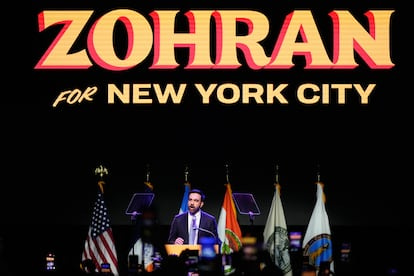
I forgot about the Democratic socialist victory in New York City. That is not a rhetorical flourish. I genuinely forgot.
In early December I was back in Manhattan, moving through the city as one does during the holidays. Jewish delis for lunch. Upper East Side dinners. Central Park South walks. Shopping. Buying books and smoking cigars. Visiting a few newly opened businesses. The city was functioning. Everything felt orderly. Civilized.
At no point did it occur to me that New York had just handed political power to a self described democratic socialist.
New York’s socialist turn exists almost entirely at the level of ideology and narrative, not lived reality. The city itself, meaning its incentives, capital flows, habits, and culture of ambition, remains largely indifferent to the slogans now attached to City Hall. That contradiction will not resolve gently.
Which is why this moment is less dangerous than it looks, and more useful.
Everyone surrounding Zohran Mamdani appears fully captured by ideology. Not pragmatism. Not institutional realism. Ideology. That matters because ideological administrations do not course correct early. They accelerate. They overreach. They confuse moral certainty with competence.
This ideological posture is already visible in staffing choices. Cea Weaver, a recent appointee to the Mayor’s Office to Protect Tenants, has publicly compared homeownership to a weapon of white supremacy.
That is how failure is taught.
Socialism rarely works. Communism never does. This is not controversial outside academic environments insulated from consequence. Some European systems combine welfare states with market discipline, and where work, productivity, and social trust still matter, those systems function tolerably. That is not what is being proposed here. And New York is not Denmark. It is a global capital hub with no margin for amateurism.
What comes instead is predictable. Announcements. Symbolic policy. Administrative overreach. A growing gap between rhetoric and results. When failure appears, the response will not be reassessment. It will be the familiar claim that the effort was incomplete.
This is the historical loop socialists do not escape. Failure is attributed not to the system, but to insufficient purity.
What Has Actually Been Promised
Strip away the language and the platform reduces to a few familiar moves.
Housing sits at the center. Rent freezes. Expanded tenant protections. Pressure on landlords. Gestures toward public or social housing. New York already operates one of the most aggressive rent regulation regimes in the developed world. The results have been consistent for decades. Reduced supply. Deferred maintenance. Distorted incentives. Capital moving elsewhere. A mayor cannot compel private builders to build at a loss. He can, however, worsen shortages. That authority is real.
Public safety follows the same pattern. Rhetoric about reducing policing, reallocating funds, and substituting enforcement with community based alternatives. The NYPD budget is largely constrained by labor contracts, state law, and federal oversight. What is discretionary is posture. Enforcement slows. Morale erodes. Response times lengthen. The effects of defunding appear without a formal vote.
Then there is taxation. The language is national. The authority is municipal. New York City does not control income tax rates independently. Property taxes are already capped, distorted, and politically volatile. The city’s tax base is narrow and unstable, dependent on high earners and commercial real estate. Pressing harder does not broaden it. It makes it more fragile.
Finally, expanded services. Free programs. New guarantees. Each recurring obligation competes with the three items the mayor cannot alter. Pensions. Debt service. Medicaid costs. These are not ideological abstractions. They are binding constraints.
What He Can Actually Do
This is where the romantic idea of power collapses.
The mayor of New York cannot print money. He cannot override state law. He cannot rewrite union contracts. He cannot nationalize assets. He cannot compel capital to stay. He cannot meaningfully restructure policing. He cannot create new revenue at scale.
What he can do is set tone. He can erode confidence. He can slow approvals. He can politicize permitting. He can pressure agencies into compliance. He can make procurement adversarial. He can signal to investors, builders, and employers that they are tolerated at best and suspect at worst.
These are negative powers. They degrade systems faster than they build anything.
How This Fails
This will not fail spectacularly. It will fail quietly.
Fewer cranes. Slower permits. Capital leaving without announcement. Costs rising under subsidy. Service quality declining alongside louder language. Increased reliance on state and federal support reframed as solidarity.
Supporters will rationalize. Critics will be dismissed. Little will be absorbed in real time.
A rising generation will encounter socialism not as identity or theory, but as administration. Through rent controls that restrict supply. Through regulatory delay that suppresses opportunity. Through capital leaving under moral cover. Through services deteriorating as obligations expand.
New York will not become socialist. What it will become is impatient. Impatient with incompetence. Impatient with performance masked by language.
The city has not survived ideological experiments so much as it has recovered from them, usually slowly and at significant cost.
The 1970s fiscal crisis was not a morality tale. It was the result of a city that promised more than it could fund, protected insiders at the expense of solvency, and treated capital as something to be coerced rather than persuaded. By 1975, New York was effectively bankrupt. Services collapsed. Crime rose. Neighborhoods emptied. The city was stabilized by external control and a reassertion of fiscal limits.
The pattern reappeared later in softer form as regulatory layers accumulated in the name of participation and fairness. The result was not justice, but paralysis. Housing supply contracted. Costs rose. Informal veto power displaced accountability. The city became less functional.
There was, briefly, a corrective. Before his long public unraveling, Rudy Giuliani was an effective mayor. Not because he offered a new ideology, but because he imposed order, restored baseline competence, and accepted tradeoffs. That period did not last. It rarely does. But it mattered while it held.
Even in the 2010s, when the city appeared flush, the constraints were visible. A narrow tax base. A real estate market dependent on confidence. Pension obligations compounding quietly. Rhetoric expanding as the margin for error narrowed.
What the city does not tolerate for long is stagnation.
And stagnation is what ideological governance produces. Not transformation. Drift. Delay. Declining performance masked by improved language until the bill arrives.
That is the risk now. Not permanent socialism, but stasis. Less dynamism. Less honesty about tradeoffs.
Which is why this moment is clarifying.
Bad ideas persist longest in theory. They unravel faster in practice.
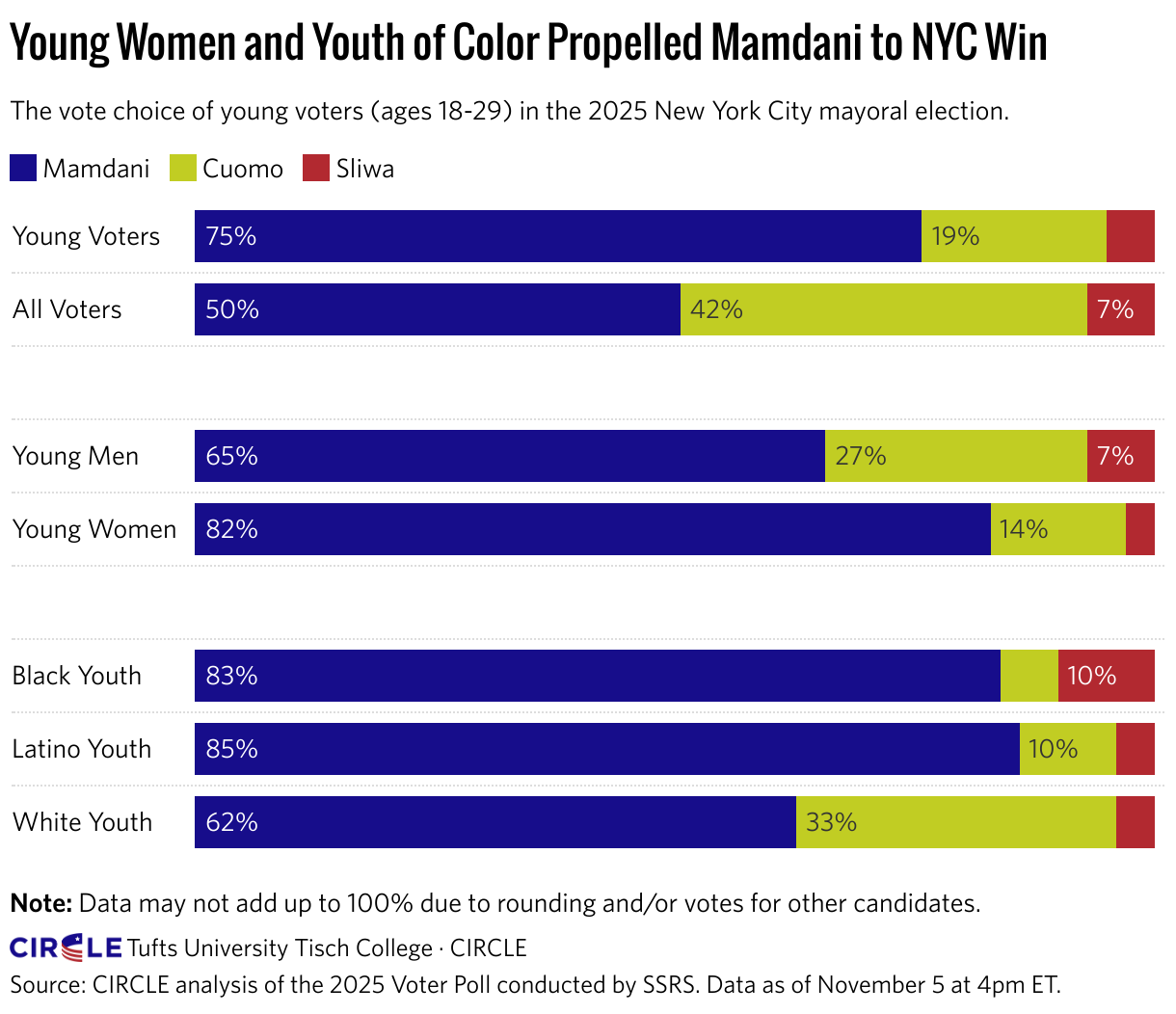
There is also a structural issue with the social base behind this politics. Downwardly mobile upper middle class voters, often young adults from affluent backgrounds who are not themselves affluent, played a disproportionate role in enabling this outcome. Not exclusively, but noticeably. For many, this was a New York moment. A way to signal distance from the rest of the country and from the norms they associate with it. The motivation was less material deprivation than status anxiety, which is a weak foundation for governance. It mobilizes quickly and dissipates just as fast.
Symbolism played an outsized role. Representation matters to many voters, and Mamdani’s election carries clear symbolic weight as the first Muslim, the first South Asian, and the youngest mayor of New York City in over a century. That symbolism helped energize turnout. It does not substitute for institutional capacity or fiscal authority.
What remains, then, is the experiment itself. An attempt to govern a capital dependent city through moral language rather than institutional constraint.
That experiment will not end in transformation.