


Here we go again. Another round of triumphalism about California as the model for the future.
In a recent column, Matthew A. Winkler praises Gavin Newsom as an economic maestro, pointing to California’s scale and output as proof of success. That argument shows up every few years. It sounds convincing until you look at how the system actually works.
By Matthew A. Winkler, Bloomberg: Who Knew ‘Slick’ Gavin Newsom Was Such an Economic Maestro
Start with the basic mistake. California does not exist on its own. It is a product of the American system. Its capital flows, labor markets, federal backing, and institutional advantages all sit inside a national structure built over generations. Treating it as a standalone model is not analysis. It is ignoring the system that made it possible.
Back east, that system is obvious. The economy is layered and distributed. New York finance, Washington governance, Boston education, mid-Atlantic logistics, Southeast growth, all tied together over two centuries. No single state carries the narrative because the strength is in the network.
Go west, and people start pretending one state is the system. California and Texas are large enough to project themselves as complete models. They dominate west of the Mississippi, with Chicago as the exception. That is where the distortion begins. Their maximalists take a regional success and try to universalize it.
California still produces. No one serious disputes that. The issue is how it produces, what it costs to keep producing, and how long that can continue. The trajectory is becoming clear. California is absorbing more constraint, while Texas is positioned for continued expansion.
The signals are not subtle. The most “productive” state in the country carries some of the most visible strain. It has the largest homeless population in the United States. It runs one of the largest welfare systems. It has the largest foreign-born population, which reflects both its pull and the pressure that comes with scale.
It still cannot build housing at scale. Infrastructure drags. Costs rise across everything that matters. The middle gets squeezed out of its own economy. That is not a side issue. That is the system under strain.
And yet the defense never changes. Look at the size. Look at the GDP. Look at the innovation. Fine. Now look at the friction.
The state is led by political leadership that consistently fails upward, insulated from the consequences of its own decisions. Public sector activity accounts for a meaningful share of the economy, but its influence extends far beyond that. Policy decisions shape outcomes at every level.
Regulation, permitting, and political priorities set the conditions the private economy is forced to operate within. Add the influence of public sector unions and entrenched interests, and you get a system that sustains itself well but corrects itself poorly. That is the part California’s maximalists refuse to confront. They point to what exists and call it proof of design. They do not ask how much of that output is happening in spite of the system wrapped around it.
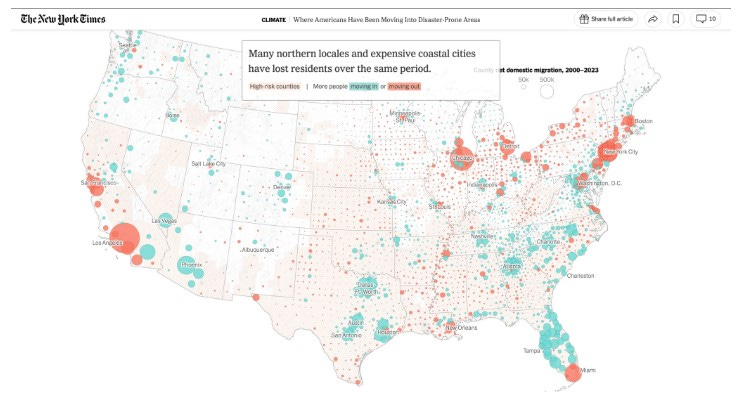
They also ignore the regional reality. California carries the western economy to a degree that distorts perception. Outside a few pockets, there is not the same depth or diversification you see in the East. When California slows, there is less around it to absorb the impact.
This is not a collapse story. It is a limits story.
California works. It just works with increasing drag, rising cost, and a shrinking margin for error.
And the louder its maximalists get, the more they reveal the problem. They are not defending a model. They are defending an outcome that was built under very different conditions.
California did not become what it is because its current system is perfect. It became what it is because of accumulated advantages inside a broader American framework. This is what happens when a system shifts from expansion to constraint. The boom does not disappear overnight, but it is almost certainly a boom / bust scenario.
And with that, the balance of western US momentum changes. California absorbs more pressure. Texas absorbs more growth. The rest of the east coast just continues on, like it has for 200 plus years.
If you want to read about California’s endless issues, check out my book: The Myth of California. The Amazon Kindle version was released in 2025, and spent a number of months as an Amazon bestseller (even #1 in a few categories). The paperback and audiobook will be released later this year.
Endorsements for “The Myth of California”
“California was once America’s “Promised Land” where people flocked to find gold, good weather, and opportunities in everything from movies to manufacturing. It was the agricultural epicenter of the world, known as the “salad bowl” of the planet. But decades of leftist leadership has destroyed everything but the weather. It’s become “Paradise Lost” with homelessness, unanswered crime, and choking tax rates and regulations causing people to flee in stunning numbers to get to places where their families can live without the boot of big government on their necks and cultural cuckoos setting the atmosphere of the lifestyle. Chad Hagan details what happened in his riveting book, “The Myth of California: How Big Government Destroyed the Golden State.” It’s the tragic story of how the irrational left destroys everything it touches and how one state exchanged its gold for garbage.
- Mike Huckabee, Former Governor of Arkansas, Bestselling Author, and U.S. Ambassador to Israel
“My father was a car salesman in a town of 800 people in Northern Minnesota. He had one vacation in his working life, and we took a trip to California. He had a friend who had settled in Carlsbad years earlier and wanted to visit. I was 10. My brother was 11, and our sister was 7. We were in awe. It was a modest home, beautifully maintained, with a yard full of fruit trees. We picked oranges and ate them in the yard. We had grapefruit off the trees for breakfast. I dreamed of moving to California for years. No longer! Chad Hagan’s book, The Myth of California, will make you disappointed, infuriated, and then just plain sad. It is a cautionary tale about how politicians can destroy a paradise in one lifetime. Ultimately, unchecked political power serves only itself. The citizens are included only to pay the bills. It is also a testament to how the crazies run the world. Most of us just want to go to work, come home and relax, and build a family and life. The crazies don’t think that way. They are loud, and they vote. Ultimately, politicians whose only interest is in power, cave in to them. (A government permit needed to wear heels taller than 2 inches in Carmel? Spare me!) As Californians now flee in droves, the stories they tell disabuse us of any notion of paradise. This book does that in spades. Read it!”
- John Linder, Former U.S. Congressman (GA-7)